About Me

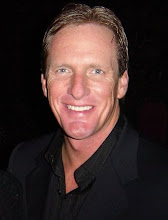
My photo
Monroe, Ohio, United States
Began my photography career as most people do...the highschool yearbook. Upon graduation I attended the US Naval Photography School in Pensacola Fla. After getting a qualification in basic photography and then later attending their Portrait School,was assigned to a military operation. Experiences included USO photography for Bob Hope, Brooke Shields, Kathy Lee Crosby and Wayne Newton.Have also had the opportunity for travel assignments to places such as Beruit, Israel, Africa, Australia, Brazil, Italy, Spain and England. Upon exiting the Navy in 1984,opened up a Tanning Salon and Health Club in Oxford,Ohio and began photographing weddings, all as a vehicle to fund my way through college. I enjoy travel, sports photography, special event and Cincinnati Reds photography. I am frequently contracted as a sports photographer by parents, sports teams, and organizations,throughout the Cincinnati and Dayton, Ohio areas, to provide the highest quality sports photography, both on an individual and team basis.
Showing posts with label Sunset Photography. Show all posts

February 6, 2012

You’re Charging Too Much For Your Photography

You’re Charging Too Much For Your Photography

Well not really – but I needed a catchy headline. Chances are you are charging too little. Let me explain.

(Please note this post is written from the perspective of a professional photographer. If you want to do photography for charity or use it to provide social outreach or pure art, this post may not be something you’ll care to read. Thank you.)

Every time – every single time – someone says – “Your price is too high,” it means that you have the wrong prospect. You don’t have the wrong product or price. You have the wrong prospect.
A man with $2000 in his pocket out to buy a car walks into a Jaguar dealership, sees a lovely XJL sedan and says, “I like that. How much is it?” The salesman replies, “$120,000 sir.” The man says, “That’s too much.” Is it? Obviously the problem here is not that the Jaguar isn’t a nice car or that it costs too much. The problem is that the man simply can’t afford a car in this price range. He’s not the right prospect. There will never be a meeting of the minds here.

So this illustrates part one of this problem. Wrong prospect always leads to no sale.

What is the solution? Is the solution to sell a different product or reduce the price? Absolutely not. The solution is to find the person who can afford that price and wants that product.

Photographers often charge too little because they have an “opinion” based on their own experience about what the market will stand for. But that’s the core problem. The photographer isn’t the buyer. The photographer doesn’t necessarily represent the market. You should be aiming higher than your own income bracket if you want to grow your business so find clients who CAN afford your higher prices and sell to them.

Most often it’s your opinion that is the problem. It’s not the price. It’s not the product. It’s your opinion about what the market will stand for.

Let me give you another example. If you live in a world where the average income is $50,000 a year, you probably haven’t considered adding a Rolls-Royce Phantom to your garage. This may lead you to believe that since you can’t afford it, nobody can. But that’s wrong-headed thinking. Want proof? Rolls-Royce sells a model called the Phantom. It’s $380,000. Now they also sell a special edition of the Phantom called the “Year of the Dragon” edition. That version of the car costs $1.2 million. Guess what. They completely sold out of those cars – worldwide – in 60 days. So while you may not be able to afford that car, it doesn’t mean someone else can’t.

There are people in this world – in fact in your neighborhood – who can write $100,000 checks without even asking their spouse for permission. There’s plenty of money around, even in a bad economy. You just have to find it.

So study demographics. Which zip code in your area is the most affluent? Where are the country clubs? These are the places where your prospects for high-end photography exist.

Not everyone cares about making a great deal of money in their photography business. Some prefer the social nature of the job or the artistic nature of the job. For them, this isn’t going to resonate. But for those of you who would like to make more money, start thinking about finding the RIGHT prospects – the ones who can value and afford what you do.

An article by Scott Bourne posted on Twitter on Feb 6th, 2012

Re-Posted by Monroe Ohio photographer Vincent Rush, Cincinnati Sports Photography and Dayton Sports Photography of Monroe Ohio. Vince Rush can be contacted by phone at (877) 858-6295 or by email at vrush@rushintl.com or visit http://CincinnatiSportsPhotography.com Check out my about.me profile!

September 6, 2011

Getting Your Name Out There as a Photographer

Over the years I’ve met and talked with thousands of professional photographers. One of the questions that comes up on a regular basis, especially with new photographers, relates to getting your name out there. A few of these I’ve written about before, but let’s see if we can come up with a list of projects to help you get started.

• Decorate the doctor’s office: I’ve been talking about this one for years. How much money do you or did your parents spend on doctor bills, especially with the pediatrician? Well it’s time for payback! The last class doctors takes before getting out of medical school is about decorating their office. They’re taught to not spend more than $50!

Think about your last doctor visit. There wasn’t much on the walls of the waiting room, unless your doc was a high-end neurosurgeon and then maybe they had a few Ansel Adams posters! So, here’s a great idea and it’s perfect for the pediatrician.

Offer to put some images on the walls of the reception area! Kids, family portraits, anything with a sense of children. Then in the corner, on the table next to that 1984 copy of Popular Mechanics put a stack of your business cards or brochures.

Here’s the deal – women make 98% of the purchase decisions to hire a professional photographer. Who takes the kids to the doctor’s office? It’s Mom and she’s sitting there bored, with nothing to read. This is about the subliminal message you can plant with a few well done family and children’s portraits!

• Restaurants and coffee shops: They all need help, especially if you’re a regular customer. Helen Yancy told a group of photographers at Summer School about getting started at a local Coney Island restaurant in her area just by decorating the walls of the restaurant with her images.

• Meet and Greet: Take a couple of days and just wander around your local business area. Get to know the neighborhood and introduce yourself. Local businesses, sooner or later, have imaging needs and you want to let them know you’re there.

• Start your own network luncheon. Contact everyone in the area who has something in common with your target audience. Find an inexpensive diner type restaurant and get together once a month for lunch just to talk about what’s going on in the community.

• Get involved in your community! With or without a camera in your hand, get involved with the people you’re looking to support your business. Join Kiwanis, Rotary, Exchange Club etc.

• Do your own fundraiser! Vicki Taufer did one of the very first pet days in her area three years ago and today she’s one of the best known pet photographers in her community. She tied in with the local animal shelter, but you can set up a fundraiser with any organization.

• Is there a local children’s store? It’s another great one from Vicki Taufer, who when she was first starting, did all the children’s portraits of the clerks and owner of the local children’s clothing shop. They all became her ambassadors.

• Develop promotions and advertise! I know it’s obvious, but this is the first one in the list that will actually cost you some money, but you have to have a plan. If you think you can get away with running just one ad and then waiting to see the results, think again. You need to have consistency in your timing and in the placement/location of the ad.

• Cross-promote with other vendors. It’s easiest to explain within the wedding category, but essentially you’re going to give a discount certificate to any bride for the local florist and the florist is going to give the bride a certificate for something from you, but try and stay away from discounting. Give an hour of extra coverage or an addition 8×10 – go for added value rather than price reductions.

• Contact the PTA at the local schools. Isn’t it time we upgraded the bake sale concept? How about offering family sittings for a holiday card shot. It’s only September and you’ve got time to work with any local association or group and have an image in people’s hands in time for their holiday cards.

• Career Day and Adult Education: All of you are qualified to do a career day at the local school and help motivate an interest in photography with kids. Many of you are also qualified to teach an adult education class on photography. This is about getting involved in the community and don’t forget to do a press release to the local paper with a picture of you interacting with the participants at each event.

• Enter photo contests and competitions. Most of the national associations have some level of print competition. Local chapters have regular print competition as well as portfolio reviews. This is a great way to get feedback outside your immediate circle of family and friends.

It’s not costly to get your name out there, but it is labor intensive. This is where outsourcing comes into play. By not doing everything yourself you can find the time to market your personality and skill set. Your time is best spent getting to know your client base rather than sitting behind a computer editing images!


Posted by Monroe Ohio photographer Vincent Rush, Cincinnati Sports Photography and Dayton Sports Photography of Monroe Ohio. Vince Rush can be contacted by phone at (877) 858-6295 or by email at vrush@rushintl.com or visit http://CincinnatiSportsPhotography.com Check out my about.me profile!

March 10, 2011

Know your Sport...Know your Players! Part 2

Karate Black Belt and Olympic hopeful Amanda Joiner photographed in Monroe by Photographer Vincent Rush

Volleyball
Volleyball is a rarely covered event, with beach volleyball getting more press than the traditional gym based variety. Volleyball can yield some rich, colorful and dramatic shots given the need and desire to take them. Your access in volleyball venues will vary drastically. For instance, during a high school game, you may be permitted to shoot along the sidelines, or not far behind the end lines. As the level of competition goes up, you will be moved further and further back. In beach volley ball, you probably will not be permitted in the sand pit at all. So pack a long lens and some sun block (for the beach game).

Volleyball shots are tricky to use auto focus on. If you are shooting from behind the lines towards the net, the AF could trigger on the net, the back of the opposing players, the back wall, or just about any point in between. It is best to use a vertical sensor for this sport since people are going up and down and there is little side to side movement. For manual focus, you want to zone focus. From behind the end line, most all action at the net will be at the same distance from you, so focus on an area just a little behind the net and leave it there.

For shots along the side lines, it is best to shoot at an angle to capture the faces. These are the best times to capture digs and diving players as you should have a fairly un-obscured view of all the players. Traditionally, volleyball follows the "Bump Set Spike" ritual. Learn who the diggers, setter, and hitters are. Then take your time working on a shot of the individual skill you want to capture. Your setter will be easy to track and get shots of. Digging is a bit tricky since it can come from any were on a given half of the court, be a low or high dig, involve a dive or other less than predictable motion. Hitters/blockers are fairly easy to capture since that area of play is somewhat limited.

Your safeties are the player serving and the setters since they are fairly easy to capture. Next work on your hitters/blockers followed by digs.

Golf
Golf is a fairly easy game to shoot as far as action goes, but it is one of the toughest because of the nature of the game. That is you can get good action shots if you can get there at all. Consider the following. Golf is a long distance, one direction game. It is played over a course of thousands of yards in a some what straight path and it is played from hole to hole. Secondly, it is a quiet game where the slightest distraction is not allowed. Finally, for your safety, your access to swing areas is limited.

The first problem is addressed by one of two methods. First, you can camp at one location, such as a tee box or a green on one hole and shoot multiple people as they pass you. Or alternatively, you can with the permission of the course, use a cart and follow individual golfers. Cart paths are narrow and heading against the grain is difficult. Ideally, you will learn the course and find a spot where you can shoot both green play and a tee box with minimal movement.

Even at 400mm, you may not get close enough for good tight shots. Longer lenses are almost a must for capturing competitive golf. If you are shooting recreational golf, say your beer buddies, you can get closer and a lens in the 200mm range will suffice. Any focus method will work since the players are basically standing still. Golf, in particular at the pro level is very sound sensitive. Turn off the AF (you don't need it any way) and go to a slient manual focus. If you have silent AF lenses, such as the Canon USM or the Nikon AF-S lenses, then you can AF. Some events may require you to use a sound blimp around the camera if your shutter/motor are distracting to the golfers.

There are a few main golf shots, in most all cases, they are individual shots. The primary action golf shots include a shot during the back-swing, a shot near impact of the ball, a shot after the follow-through with the golfer looking for the ball or any time during a putt (but be quiet). However, there are a lot of opportunities for safeties in golf. Any shot of a golfer studying the course, be it looking at the scorecard, messing with the golf bag, talking to the caddie, or lining up a putt are easy shots to get. These are times where the firing of the shutter will be more tolerated. Also, shots after the follow-through are considered safe shots. The action is paused and you know its going to happen so getting them is somewhat easier.

Don't forget that a lot of good golf shots, and other sports for that matter do not involve play at all. One of my personal favorite golf shots was of a greens keeper changing the pins.

Track and Field
Track and Field meets are a lot of fun to shoot. You get a lot of variety of shots, multiple opportunities to shoot most participants and events and there generally is a lot of emotion displayed during a track meet. The most difficult things about track meets are logistical.

Access can be restricted depending on the level of play that is being photographed. At a high school meet, there is little in the way of restrictions. Just stay out of the participants way, or out of the way of projectiles like shot puts and discus and you are okay. As you climb the ladder, access gets tighter and tighter. Even at NCAA Division I level meets, the access is still pretty good. Pro level, Olympic, or Major Events will be more tightly controlled due to the size of the event and the amount of media present. Access will be restricted to particular shooting areas.

Logistically, track meets are hard to cover because multiple events are going on at once. If media movement is controlled, you may only get to shoot one or two events. But at a more relaxed meet, you will have more freedom to scoot from event to event. Because of time, multiple heats/attempts and so on, the track will generally be filled with races while the inside of the track contains the field events.

There are no specific safety shots in a track meet, but the individual events are fairly easy since almost all movement is predictable. Track events all move one direction. Shooting the finish, or turns provides the most dramatic events. For the hurdles, it is pretty easy to time the players as they peak over the hurdles. Relays, with the baton passing is probably the hardest part to capture because the runner taking the baton may obscure the runner handing it off. Use follow focus to catch runners and they move past, or zone focus if you are working on the finish line.

Field events, like wise are very predictable. Events like the high jump, long jump, and pole vault involve participants running towards an object, and then jumping over it. This is a zone focus heaven. Use a little depth of field (F5.6 or so) and focus on the bar for the high jump and pole vault and fire as they start up and over. You should catch them at the peak as they hurdle over the event. If you didn't get that run, don't worry, each player generally takes two or three shots and there are multiple players.


The Long jump, and its cousin, the triple-jump are pretty easy. They are also zone focus events. If you are at the end of the pit, focus just a few feet into the pit and fire when they hit the board and begin their jump. After a few jumps, you should have a feel for when they peak at their jump and will nail a few really good jumps. If you have to shoot from the side, you still zone focus over the middle of the pit, track the runner as they head down the track and fire when they go airborne.

The throwing and hurling events are likewise easy to shoot. The players have to stay within a confined space, so zone focus and you will do well. Try to catch them when their face is towards you and when their emotion is at its best or just after the throw.

If you have good access, you can get some great shots with an 80-200mm lens. If you are restricted you may need a 400mm or longer, but in most cases you can get away with smaller lenses.

Gymnastics and Figure Skating
Gymnastics, as a rule, is a no flash event. While a flash may be tolerated at a basketball game, or a night football or baseball game, its generally a no-no for gymnastics. The participants are easily distracted and the slightest hesitation can cause serious injury. The bad thing is most gymnastics happen is poorly lit situations. Lighting will be covered later.

Like Track and Field, gymnastics is a series of events with individuals performing. The events go on simultaneous to each other and depending on the level of the meet, your access may be limited to minimize distractions. With the exception of the floor program, most of the gymnastics events are kept in a small area which makes focusing easy and the movements are predictable. Even with the vault, your object is to catch the vault itself or the landing. So you will probably want to zone focus most of the events. The floor exercise will require follow focus or auto focus. Your lens choice will vary too much by access, but like other indoor sports you want the fastest glass available.

Events like the balance beam, rings, parallel bars, and the uneven bars provide several opportunities to capture the athletes in artistic, athletic, and emotional poses where capturing the moment is somewhat easier. The vault and floor exercises require more timing to get good shots. However, for the floor exercises, its about emotion anyway, so catching the cute smiles and ballet style poses is critical to telling the story more than catching someone in a tumbling pass.

Figure Skating combines the problems of gymnastics with the problems of hockey. You are limited by your access to off ice and you have to compensate for the white surface. Lighting isn't as good as a hockey game. Frequently, the lighting is spot lights, so knowing stage lighting is important. The programs can be predictable and are generally published before the event so you know when the triple jumps are coming. Lens length is determined by proximity to the surface but again, you want the fastest glass possible. Autofocus is a good idea for Figure Skating, though some success with follow and zone focusing can be achieved.

Motorsports and Racing Events
These sports are generally fairly easy to photograph. They generally occur during the daytime and you can get away with longer slower lenses. AF isn't quite as important because the action occurs in a very precticable fashion. You can follow or zone focus easy enough. Safety shots are the partcipants racing past you. The challenge for racing sports is to show motion which will be covered shortly. You don't want your Forumla 1 car looking like it is sitting still. Also much more importantly, there is a lot to the game other than the cars or horses running around the track. The pits/paddock afford some of the best shots. Be ready for an accident. They can happen at any time.

The biggest problem with racing sports is the distance from the track. You only have the partcipants for a brief time on each lap and in the case of the ponies, you only get them for one lap (per race). You will need big lenses in almost all circumstances for the race itself. Your shorter lenses work well for crowd and off track shots.


Written by Sports Photographer Rob Miracle and posted by Cincinnati Ohio Sports Photographer Vincent Rush of Cincinnati Sports Photography.

Posted by Monroe Ohio photographer Vincent Rush, Cincinnati Sports Photography and Dayton Sports Photography of Monroe Ohio. Vince Rush can be contacted by phone at (877) 858-6295 or by email at vrush@rushintl.com or visit http://CincinnatiSportsPhotography.com Check out my about.me profile!

February 23, 2011

Breaking The Rules Of Photography — Before You Break The Rules

                  Sunset in Scottsdale Arizona by Cincinnati, Ohio Photographer Vincent Rush

I was having a casual conversation with a renowned photographer. And he proudly said that it was all about breaking the rules – he never follows any rules. He said he does that because if he followed the rules he would never have grown beyond those rules.

Though breaking the rules is creative, lately I’m getting the feeling as if it’s becoming a fashion statement – such statements seem to be lacking depth and knowledge and irresponsible. I have a more conservative approach to “breaking the rule” rule. It is this attitude that prepares you for a long haul at photography. So go ahead and break those rules; but here’s a checklist before you set out to break them.
  1. Know the rules

    You can’t break something you don’t know about. You need to understand what the rule is, why is it practiced and what is the barrier it poses to your creativity. Certainly there must be a drawback else why would you bother to invest time in breaking the rule.
  2. Perfect the rules

    Understanding the rule is not good enough. You should be perfect at following them. If you are not, you are already neglecting them. That’s breaking the rules in a sense – but it also implies what level of control you have on your art and equipment. Practice till you set some of the best examples for yourself. You will realize, at some level the rule gets in the way of your creativity and results. Now you know you can explore further.
  3. Don’t reinvent the wheel

    Most of the times people just end up reinventing the wheel. I asked this photographer “Do you make use of the rule of thirds?” He answered that he never followed any rules. The rule of thirds is a rule of composition that helps you frame shots which are aesthetically more pleasing. This and similar rules are tested by specialists and through big surveys. When you make such a statement saying that you don’t follow the rule of thirds, you are saying you don’t invest efforts in making your composition more aesthetically pleasing. You may make some great compositions and then you may make some other – but in this context they are more of exceptions than rules. At the end of the day after shooting a few hundred shots you realize all the best shots follow some or the other rule of composition.
  4. Work to get better results

    Breaking the rules is a great idea provided you get better results than you’d have got following the rules. What’s the point in breaking the rules when you end up with something which doesn’t make sense? Get better results – that’s the way creativity is rewarded.
  5. Experiment

    Breaking the rules doesn’t work by itself. You have to spend hours experimenting with light, composition and several other parameters, get creative, visualize and try again. Explore your talent and get creative. Getting creative is the way to breaking the rules. It is when rules get in the way of your visualization and creativity that you have to chose not to follow them. Creativity is what makes a photograph stand out of the thousands. Creativity gives you the edge and you realize the individuality of the photographer within. The more you experiment, the more you get experienced and the better your work becomes.
So go ahead and break the rules. But tick off this list first.


Posted by Monroe Ohio photographer Vincent Rush, Cincinnati Sports Photography and Dayton Sports Photography of Monroe Ohio. Vince Rush can be contacted by phone at (877) 858-6295 or by email at vrush@rushintl.com or visit http://CincinnatiSportsPhotography.com Check out my about.me profile!

January 9, 2011

9 Tips — How To Shoot Against The Sun


Camden, Ohio Back Roads by Vincent Rush

Shooting into the light has always been a challenging task. Whenever we capture any subject against the light.It shows up dark (high contrast) and when we shoot portraits, it gives the squint factor. There are 9 tips to alleviate some of the issues while shooting into the light.


Safety comes first: Practice caution when shooting into the sun since the sun can burn your camera sensor and/or cause eye-damage if allowed through the lens for long durations (more than a few seconds).

Use a small aperture: A small aperture reduce the size of light source and helps avoid blowing the highlights. A small aperture gives you the starlight effect which shows up beautifully against the subject.

Use Sun Flares: While sun flares are avoided most of the times, creative use of sun flares can render a dreamy look to the entire scene especially the portraits.

Strong artificial light: A smaller aperture necessitates the use of extra lights. This helps compensate for the low light, to control the shadows and also to reduce the contrast in the entire scene.

Shoot in the magic light: It is always recommended to shoot in the soft, angular light of the sunrise or sunset rather than the harsh, bright light of the afternoon sun. Also shooting during the main part of the day can pose limitations to the composition and perspective since the sun is high up in the sky. Magic light (when sunrise /sunset) is one of the best time to shoot against the sun.

Use of GND filter: Use a GND (Graduated Neutral Density) filter which allows you to tone down brighter areas of the composition and help balance the overall light in the scene.

Use of Light Meter: The old adage “prevention is better than cure” fits this scenario. You can’t compensate or correct bad light during post-processing. So measure and correct the light during the shoot.

Use of Reflector: Use a reflector to avoid underexposing the main subject and reflect some light on the face of the subject to control the shadows.

Post-processing: Last but not the least, feel free to toy around with the image during the post-production to fine-tune the desired effect. With the new image editors the possibilities are countless.


Posted by Monroe Ohio photographer Vincent Rush, Cincinnati Sports Photography and Dayton Sports Photography of Monroe Ohio. Vince Rush can be contacted by phone at (877) 858-6295 or by email at vrush@rushintl.com or visit http://CincinnatiSportsPhotography.com